How Investment Holding Companies Work, and Why Investors Use Them
What an investment holding company is, how it earns and pays out money, why listed ones often trade below asset value, and when a private one makes sense.

 Asia StrategicCapital · Property · Business · AI
The region is not one market. It is a dozen exchanges, currencies and rulebooks that happen to share a time zone or two.

Ask ten investors what "investing in Asia" means and you will get ten different portfolios. One person means Japanese exporters. Another means Singapore bank stocks and a couple of REITs. A third means an Indian index fund and a bit of Vietnam. All of them are right, which is exactly why the phrase is so unhelpful on its own.
This guide is our starting point for the region. It sets out how the main markets differ, which tools investors actually use, and where most of the avoidable mistakes happen. The articles linked from here go deeper on each piece.
Singapore's exchange, SGX, is small by listings but heavy on banks, REITs and companies that do most of their business outside Singapore. Bursa Malaysia leans toward plantations, utilities, banks and a long tail of small caps. The Stock Exchange of Thailand is dominated by energy, banks and consumer names, with a market that foreign money moves in and out of quickly. Hong Kong is the gateway to Chinese companies, and its mood tracks Beijing's policy calendar more closely than many investors expect.
The practical consequence is that "Asia exposure" often turns out to be a bet on two or three sectors. A portfolio of Singapore blue chips is largely a bet on interest rates, through the banks and the REITs. A Malaysian dividend portfolio may be partly a bet on palm oil prices. Knowing what you actually own is the first job.
A Malaysian investor buying Singapore shares is also buying Singapore dollars. Over the past decade that has usually helped, because the ringgit weakened against the Singapore dollar for long stretches. It can just as easily work the other way. Before buying overseas, decide whether you want the currency exposure or are simply tolerating it, because the answer changes which products make sense. Some funds hedge currency and some do not, and the difference shows up clearly in returns.
Many Asian markets have a strong dividend habit, partly because founding families and government-linked shareholders like regular cash. In Singapore, dividends paid by local companies under the one-tier system reach shareholders without further tax, and the country does not generally tax capital gains for individual investors. That combination is a big reason income investing is popular there.
The catch is that a high yield is sometimes a warning rather than a gift. A share yielding 9% may simply be a business the market expects to cut its payout. Look at whether earnings and cash flow cover the dividend, and what happened to it in the last downturn.
REITs let you own a slice of malls, offices, warehouses, hotels and data centres without buying a building. Singapore has one of the deepest REIT markets in Asia, and they behave differently from ordinary shares, mostly because of their sensitivity to interest rates. Our beginner's guide to REIT investing in Singapore covers how they are structured and which numbers matter.
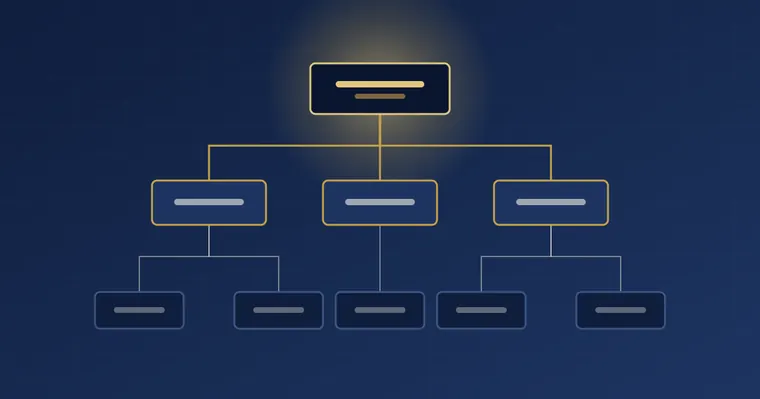
A large share of Asia's listed companies are holding companies that own stakes in other businesses. Their share prices often sit below the value of what they own, and understanding why is useful whether you are buying one or setting one up. See how investment holding companies work.
For most people, a low-cost index fund or ETF is the sensible core, with individual shares around the edges. Check where the fund is domiciled, because that affects withholding tax on dividends and, for some investors, estate tax exposure.
At the wealthier end, family offices and Singapore's Variable Capital Company structure, available since 2020, have become common ways to hold and manage investments across the region. They come with real compliance costs, so they make sense at a certain scale and not before.
The lines between our sections are thin. A data centre REIT is a property investment, a technology bet and an income product at once. Our piece on data centre REITs and the Johor–Singapore corridor shows how one theme can sit in all three. For the property side on its own, the real estate guide is the place to go.
None of these needs a finance degree. They do need a few honest minutes, which is more than most impulse purchases get.
If you are newer to investing, start with the REIT guide, since it shows how income, gearing and interest rates connect. If you are thinking about structure, how you hold assets rather than which ones, go to holding companies and then the wealth planning guide. Regulators publish useful plain-language material too, and the Monetary Authority of Singapore keeps a register of licensed advisers worth checking before you hand anyone your money.
What an investment holding company is, how it earns and pays out money, why listed ones often trade below asset value, and when a private one makes sense.

How Singapore REITs work, why they pay out most of their income, the numbers that matter (DPU, gearing, WALE) and the risks new investors underestimate.
This article is general information, not financial, tax or legal advice. Figures and rules are stated as at the date shown and may change. See our disclaimer.